By Daniel L. Bishop, AIA, Hoffmann Architects + Engineers
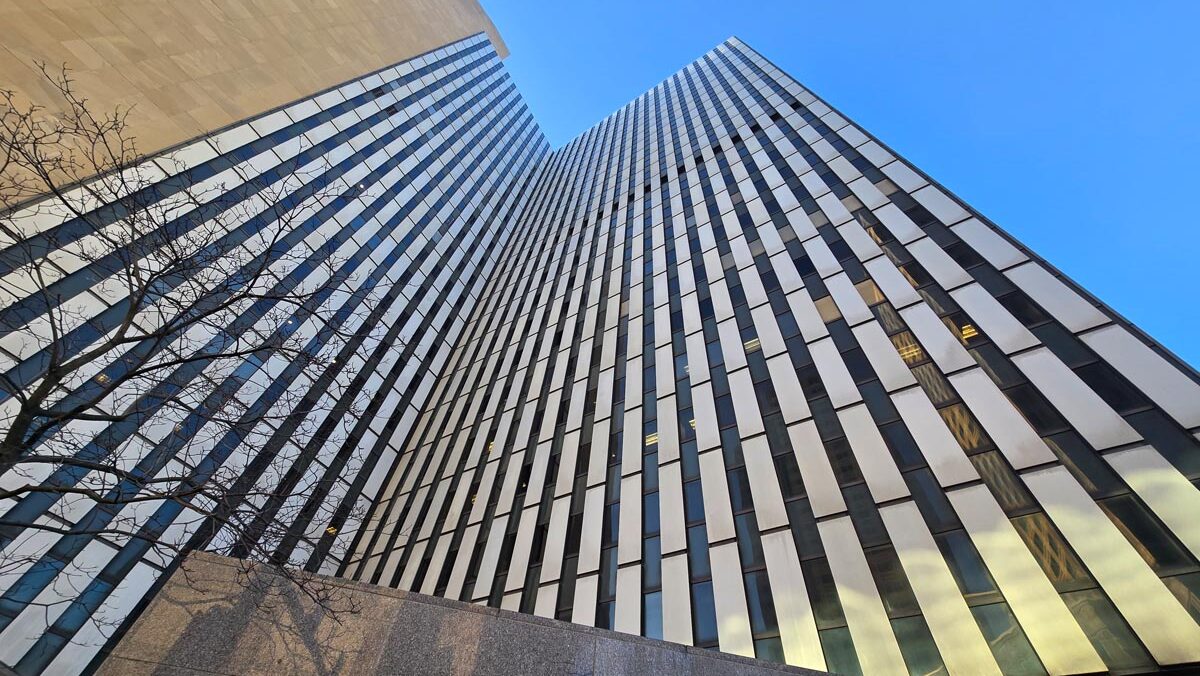
Improving the thermal performance of existing building façades is a critical strategy for reducing energy consumption, lowering carbon emissions, and enhancing occupant comfort. This article examines how heat moves through façade assemblies via conduction, convection, and radiation, and explores practical retrofit solutions that improve building enclosure performance.
Participants will review key control measures, including insulation, air barriers, low-emissivity glazing, and solar control strategies, while learning how benchmarking, energy modeling, thermography, and architectural assessments inform rehabilitation decisions. The article also compares common retrofit approaches—from interior insulation and fenestration upgrades to build-over systems and full façade replacement—highlighting their benefits, limitations, and design considerations. Through real-world case studies, participants will gain the knowledge needed to evaluate existing facades and select appropriate thermal performance upgrades that support energy efficiency, building durability, and long-term sustainability.
Learning Objectives
After completing this course, participants will be able to:
- Understand modes of heat transfer and their impact on building performance.
- Interpret key thermal performance metrics and their applications.
- Identify effective retrofit strategies for improving facade energy efficiency.
- Apply diagnostic and modeling tools to assess and optimize building enclosures.
About the Author
Daniel L. Bishop is Vice President and Director, Architecture with Hoffmann Architects + Engineers (www.hoffarch.com). As manager of the firm’s Virginia office, he oversees project teams in developing energy retrofits for existing building enclosure systems, and he provides consultation for new construction on the thermal performance of exterior assemblies.

Course Includes
- 1 Lesson
- 1 Quiz
- Course Certificate

Credits: 1 LU/HSW
Instructional Delivery Method: On-Demand: Print/Other
Prerequisites: None
Program Level: Introductory
Advance learner preparation: N/A
AIA CES program approval expiration date: 7/30/2029
AIA CES Provider statement: Endeavor Business Media is a registered provider of AIA-approved continuing education under Provider Number 10084542. All registered AIA CES Providers must comply with the AIA Standards for Continuing Education Programs. Any questions or concerns about this provider or this learning program may be sent to AIA CES (cessupport@aia.org or (800) AIA 3837, Option 3). This learning program is registered with AIA CES for continuing professional education. As such, it does not include content that may be deemed or construed to be an approval or endorsement by the AIA of any material of construction or any method or manner of handling, using, distributing, or dealing in any material or product. AIA continuing education credit has been reviewed and approved by AIA CES. Learners must complete the entire learning program to receive continuing education credit. AIA continuing education Learning Units earned upon completion of this course will be reported to AIA CES for AIA members. Certificates of Completion for both AIA members and non-AIA members are available upon request.

Credits: 1 LU/HSW
Instructional Delivery Method: On-Demand: Print/Other
Prerequisites: None
Program Level: Introductory
Advance learner preparation: N/A
AIA CES program approval expiration date: 7/30/2029
AIA CES Provider statement: Arkance is a registered provider of AIA-approved continuing education under Provider Number 10145787. All registered AIA CES Providers must comply with the AIA Standards for Continuing Education Programs. Any questions or concerns about this provider or this learning program may be sent to AIA CES (cessupport@aia.org or (800) AIA 3837, Option 3). This learning program is registered with AIA CES for continuing professional education. As such, it does not include content that may be deemed or construed to be an approval or endorsement by the AIA of any material of construction or any method or manner of handling, using, distributing, or dealing in any material or product. AIA continuing education credit has been reviewed and approved by AIA CES. Learners must complete the entire learning program to receive continuing education credit. AIA continuing education Learning Units earned upon completion of this course will be reported to AIA CES for AIA members. Certificates of Completion for both AIA members and non-AIA members are available upon request.

Credits:
This CEU is registered with the Interior Design Continuing Education Council (IDCEC) for continuing education credits.